News
Science
330 stories · feeds read 2h ago
Get Science by email, every Friday.
other · AAS Nova · 8d ago
Pulsed Infrared Emission from Magnetar 4U 0142+61 Detected by JWST (opens the publisher’s site)
Observations from the James Webb Space Telescope and NuSTAR suggest that pulsed infrared emission from the magnetar 4U 0142+61 originates within its magnetosphere.
other · AAS Nova · 8d ago
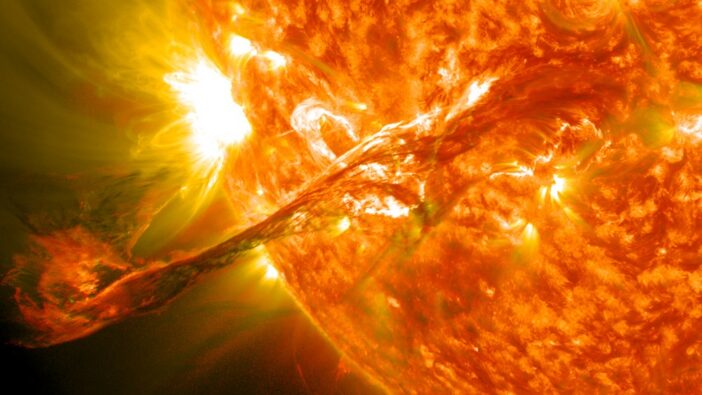
Launching an Investigation into Cannibal Coronal Mass Ejections (opens the publisher’s site)
New research investigates how multiple coronal mass ejections can merge into a single, more destructive event when erupting from the same area.
other · Universe Today · 8d ago
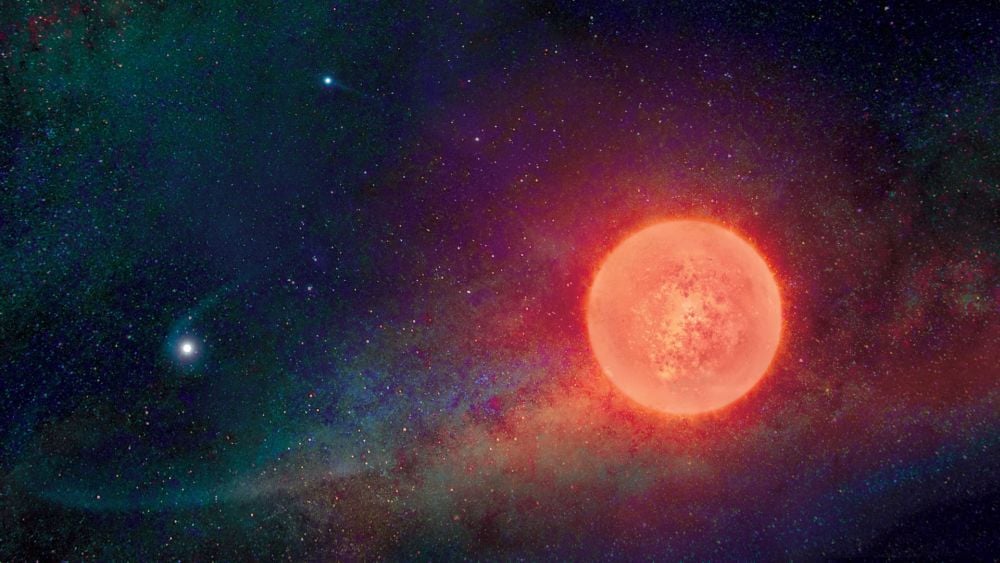
A Triple Star System 'That Shouldn't Exist,' Only 28 Light-Years from Earth (opens the publisher’s site)
Astronomers have discovered a triple star system that challenges current understandings of stellar evolution and common envelopes.
other · Phys.org · 8d ago
Researchers trace shifting pulsation modes in δ Scuti star KIC 4737720 (opens the publisher’s site)
Astronomers are studying the brightness variations of the star KIC 4737720 to analyze its simultaneous pulsation modes and understand its internal physical processes.
other · Phys.org · 8d ago
Venus-like conditions reveal how minerals could preserve traces of ancient water (opens the publisher’s site)
Research suggests that despite extreme surface conditions, certain minerals on Venus could preserve evidence of the planet's ancient water.
other · NASA · 8d ago
NASA’s Curiosity Mars Rover Collects Samples (opens the publisher’s site)
The Curiosity rover has collected 49 rock samples from the Martian surface using its drill for onboard chemical analysis.
other · Phys.org · 8d ago
Low-viscosity lavas reveal a key to Mars's past (opens the publisher’s site)
Analysis of images from the Perseverance rover's exploration of the Séítah formation suggests that low-viscosity lavas shaped the geology of Mars's Jezero Crater billions of years ago.
other · Phys.org · 8d ago
A star's last gasps: ALMA reveals a giant gas ring and budding hourglass around a star in transition (opens the publisher’s site)
Astronomers using the ALMA telescope have captured a rare view of a star in transition, revealing a giant gas ring and an hourglass-shaped structure as it evolves into a planetary nebula.
other · Universe Today · 8d ago
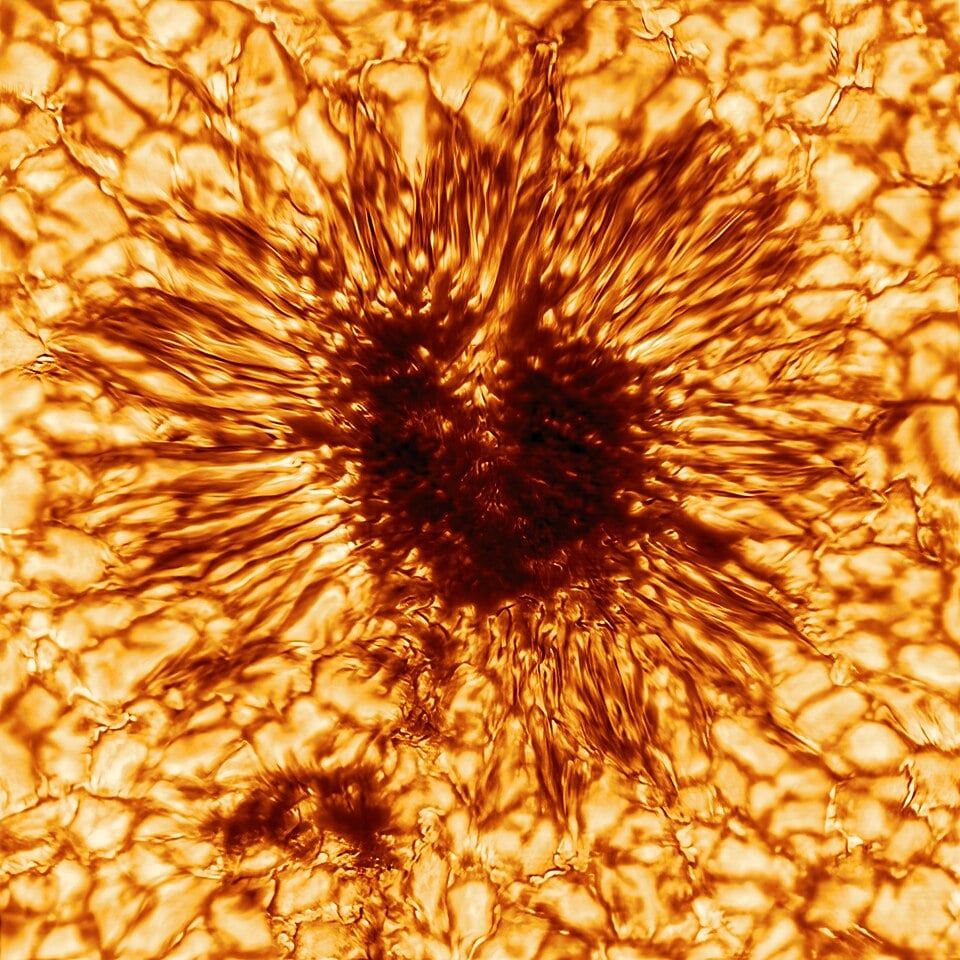
Sound Waves From Sunspots Launch Fiery Plasma Jets Across the Sun (opens the publisher’s site)
A new study in The Astrophysical Journal examines 'dynamic fibrils,' plasma bursts that help explain why the Sun's outer atmosphere is significantly hotter than its surface.
other · Phys.org · 8d ago
Astronomers reveal the oceanic origin of Europa's sodium cloud (opens the publisher’s site)
Observations from the W. M. Keck Observatory show that the large sodium cloud surrounding Jupiter's moon Europa has remained stable for over twenty years, suggesting an oceanic origin.
other · Phys.org · 8d ago
Dark energy may originate from known laws of particle physics (opens the publisher’s site)
Scientists are exploring the possibility that dark energy, which drives the accelerating expansion of the universe, may be explained by existing laws of particle physics.
other · Universe Today · 8d ago
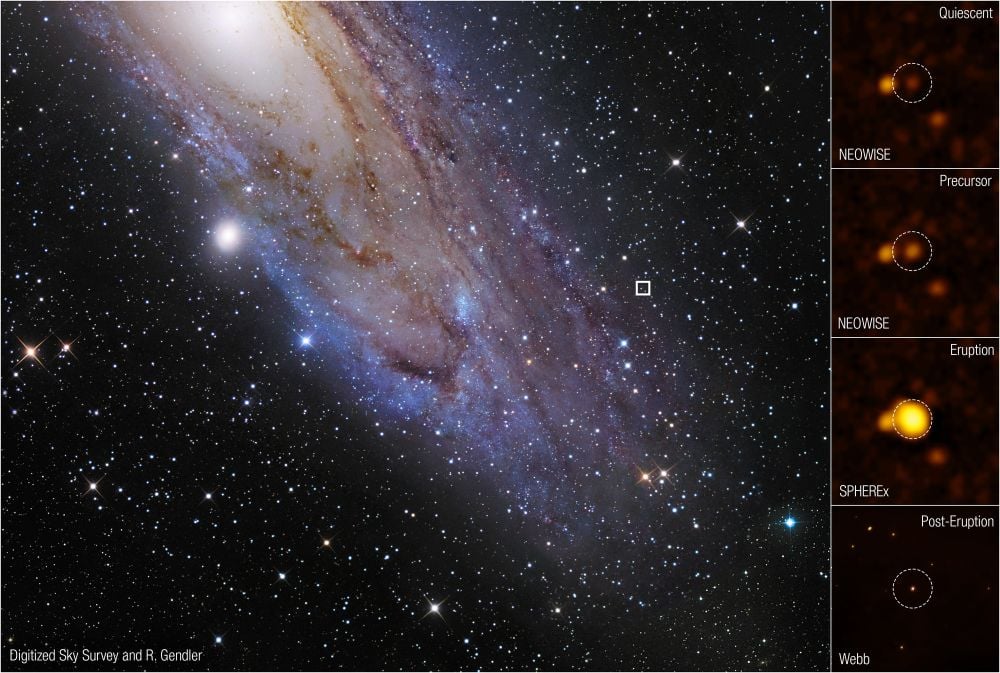
This is the First Time Astronomers Have Seen One of These Stellar Mergers (opens the publisher’s site)
Astronomers have observed a luminous red nova in real time, capturing the process of two stars merging within a common envelope of gas.
other · Phys.org · 8d ago
Space travel changes the brain's immune cells, but not behavior (opens the publisher’s site)
Research indicates that exposure to space environments changes the immune cells in the brain, although these changes do not appear to affect overall behavior.
other · Phys.org · 8d ago
Why are some galaxies more lopsided than others? A catalog offers clues to the imbalance (opens the publisher’s site)
Astronomers have created a comprehensive catalog by combining 37 studies to investigate the causes of asymmetry in spiral galaxies, such as gravitational tugs or uneven gas infall.
other · Universe Today · 8d ago
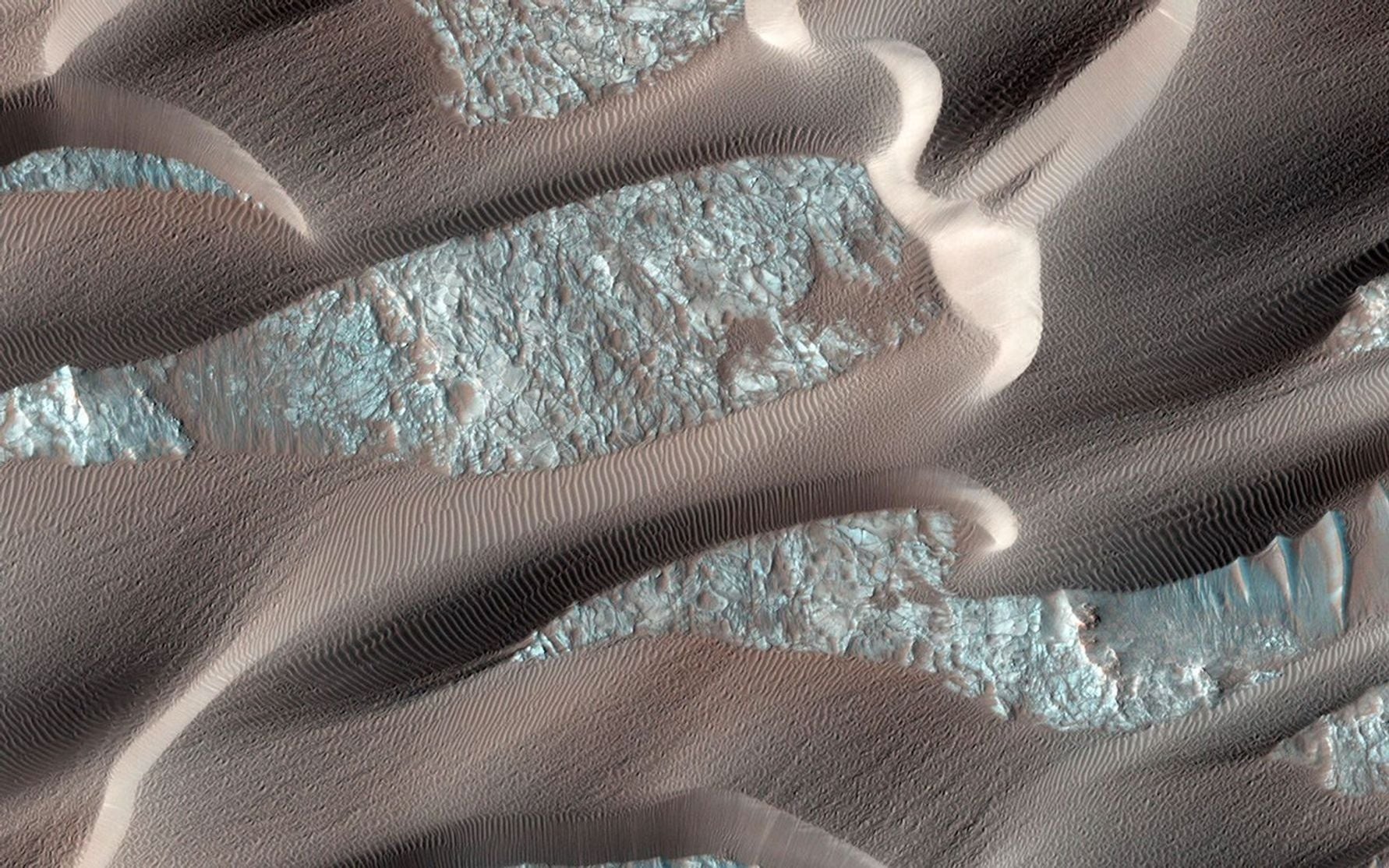
Tiny Grains of Sand Act as Cosmic Speedometers for Alien Winds (opens the publisher’s site)
Researchers at Stanford have developed a method to determine wind speeds on other planets by analyzing the characteristics of sand dunes, moving beyond simply identifying wind direction.
other · Phys.org · 8d ago
Galactic shock: Discovery challenges our understanding of the Milky Way's structure (opens the publisher’s site)
A University of Sydney researcher has found evidence that the Milky Way's star formation patterns differ significantly from those of nearby galaxies.
other · Space.com · 9d ago
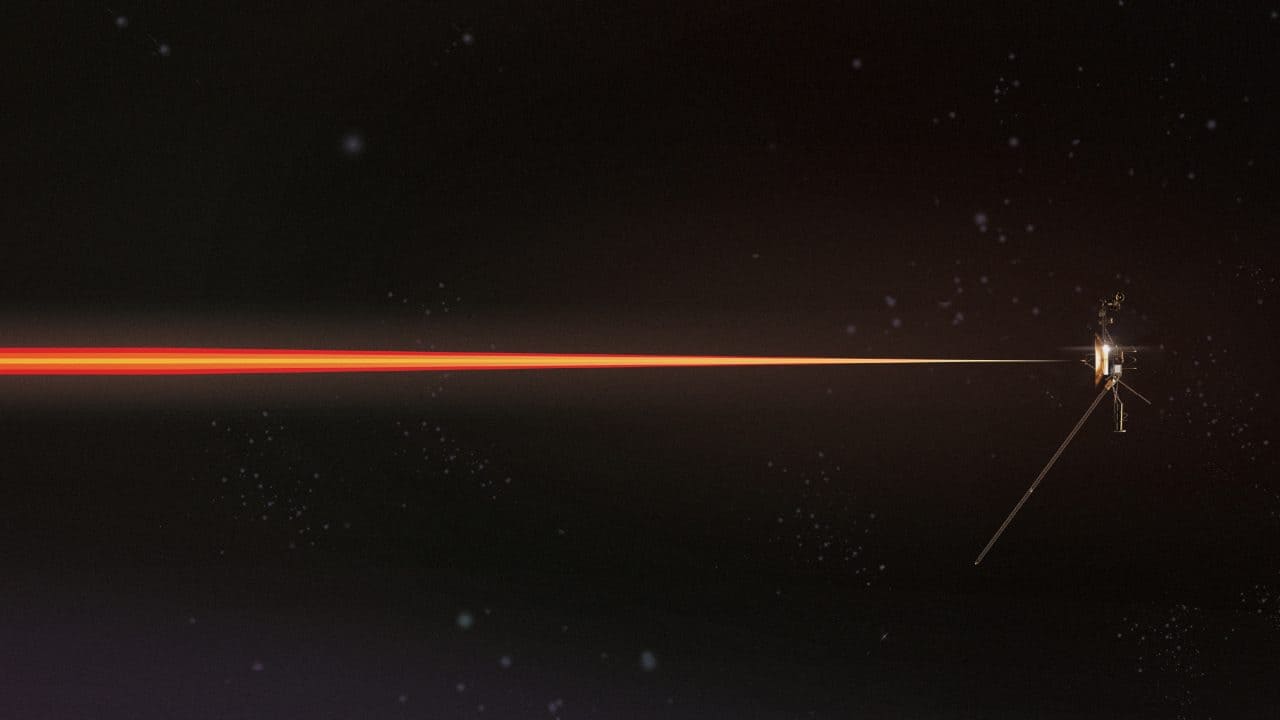
Voyager 1 Reaches Distance of One Light-Day from Earth (opens the publisher’s site)
NASA's Voyager 1 has reached a distance of approximately 26 billion kilometers from Earth, meaning radio signals now take 24 hours to reach the probe. The milestone celebration was marred by a technical glitch that stopped the transmission of scientific data.
other · sorae · 9d ago
Voyager 1 Reaches Distance of One Light-Day from Earth (opens the publisher’s site)
NASA has confirmed that the Voyager 1 spacecraft has reached a distance of one light-day from Earth, calculated via radio signals despite ongoing data transmission issues.
other · Phys.org · 9d ago
Mercury-bound X-ray telescope delivers first images after eight years in space (opens the publisher’s site)
The BepiColombo spacecraft, a joint mission by ESA and JAXA, has sent back the first X-ray observations from a UK-built instrument during its journey to Mercury.
other · Phys.org · 9d ago
Euclid's hunt for strong gravitational lenses is off to a strong start (opens the publisher’s site)
The Euclid space telescope has started its mission to identify strong gravitational lenses to help scientists study dark matter and dark energy.
other · Phys.org · 9d ago
ESA's Hera probe uses 'superhuman' vision to inspect NASA's asteroid crash site (opens the publisher’s site)
The European Space Agency's Hera mission will use advanced imaging to analyze the aftermath of NASA's DART mission, which intentionally crashed into the asteroid Dimorphos to test planetary defense.
other · Phys.org · 9d ago
If tiny 'primordial' black holes exist, here's how we might find them (opens the publisher’s site)
Scientists have theorized that tiny black holes formed shortly after the Big Bang could exist and potentially account for a significant portion of dark matter.
other · Phys.org · 9d ago
Cryptography-inspired method speeds up searches for elusive pulsars (opens the publisher’s site)
Scientists have developed a new method to search NASA data for pulsars up to a million times faster than previous techniques.
other · Space.com · 9d ago
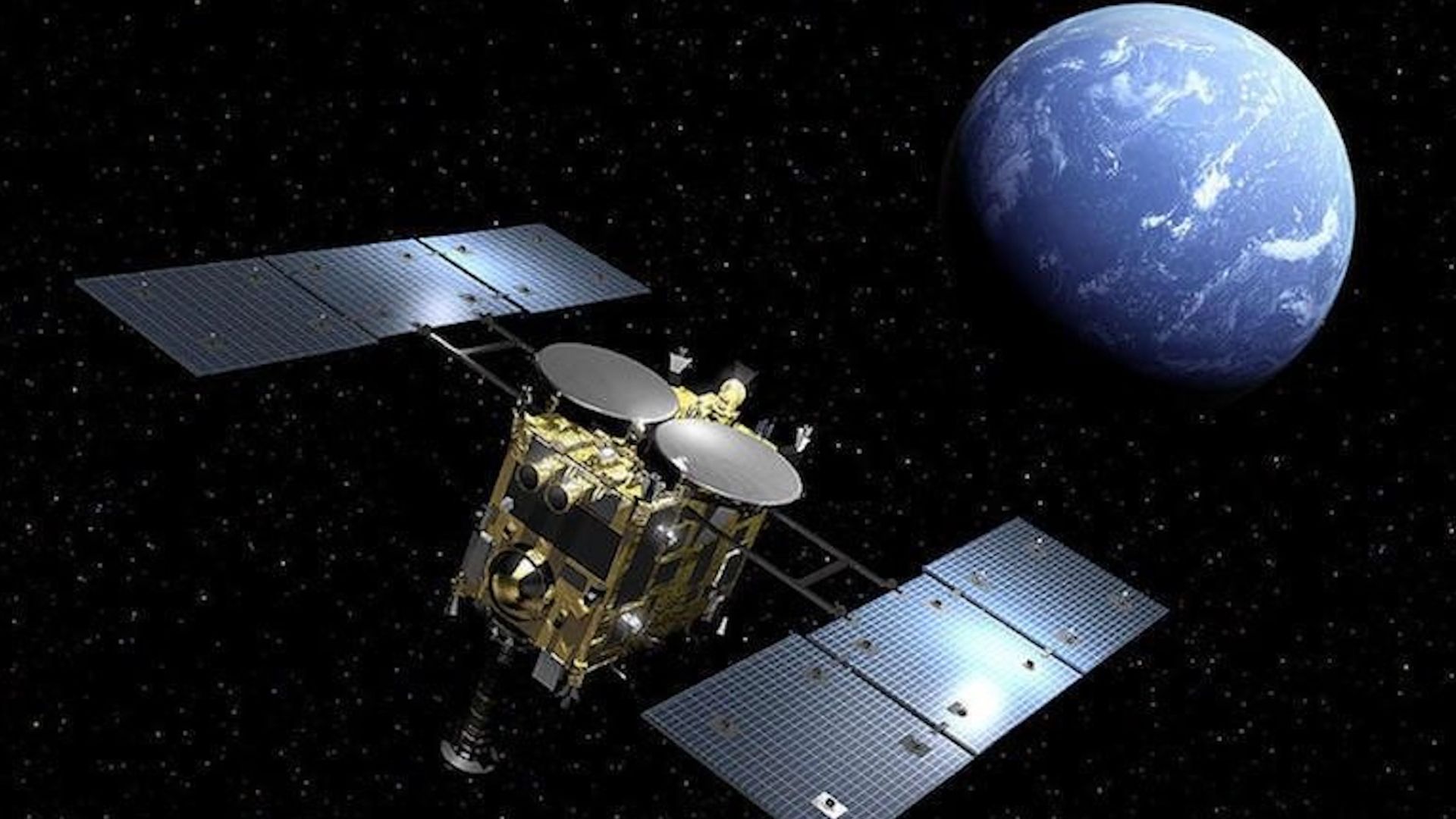
No more asteroid landing: Engine trouble forces Japan's Hayabusa2 probe to change plans (opens the publisher’s site)
Japan's space agency is altering the final objectives of the Hayabusa2 mission after encountering technical issues with the spacecraft's ion thrusters.
other · NASA Watch · 9d ago
NASA’s Interstellar Fleet (opens the publisher’s site)
NASA Associate Administrator Nicky Fox addressed questions regarding the status of the Voyager 1 spacecraft and the agency's interstellar fleet during a press conference.
other · AAS Nova · 9d ago
Disk or No Disk? Revisiting the Proxima Centauri System with Deep ALMA Observations (opens the publisher’s site)
Researchers used the Atacama Large Millimeter/submillimeter Array to investigate Proxima Centauri and found no clear evidence of previously purported dust belts.
other · Phys.org · 9d ago
Lunar sample research yields new discoveries, revealing the history of the moon's largest impact basin (opens the publisher’s site)
An international team led by the University of Hong Kong has discovered new evidence regarding the formation and evolution of the moon's largest impact basin.
other · trv-science.ru · 9d ago
TRV Science Issue 467: Starship Reusability and Astronomy News (opens the publisher’s site)
The latest issue of TRV Science covers SpaceX's Starship progress toward reusability, the Hera mission, and various astronomy and biology updates.
other · Phys.org · 9d ago
NASA's Voyager 1 phones home from an awe-inspiring one light-day away (opens the publisher’s site)
NASA's Voyager 1 spacecraft has successfully transmitted data back to Earth from a distance of one light-day in interstellar space.
other · Phys.org · 9d ago
Astronomers discover remarkable triple-star system just 28 light-years from Earth (opens the publisher’s site)
Astronomers have found a triple-star system located 28 light-years from Earth that provides new insights into stellar evolution and interaction.