News
Science
330 stories · feeds read 2h ago
Get Science by email, every Friday.
Science · NASA · 18d ago
NASA Invites Media, Public to Join Voyager 1 One-Light Day Activities (opens the publisher’s site)
NASA is highlighting Voyager 1's milestone of reaching one light-day from Earth, over 16 billion miles away, nearly 50 years after launch.
Science · Space.com · 18d ago
Uranus has a weird magnetic field that's stumped scientists for 40 years — we may finally know why (opens the publisher’s site)
Extreme internal conditions and electrical conductivity may explain why Uranus and Neptune have unusual lopsided magnetic fields.
other · AAS Nova · 18d ago
The Debris Disk Host β Piscis Austrinus is a Rapidly Rotating Star Seen Nearly Pole-On (opens the publisher’s site)
Researchers used a new spectroscopy analysis method to determine that the rapidly rotating star β Piscis Austrinus has poles that are 24% hotter than its equator.
other · AAS Nova · 18d ago
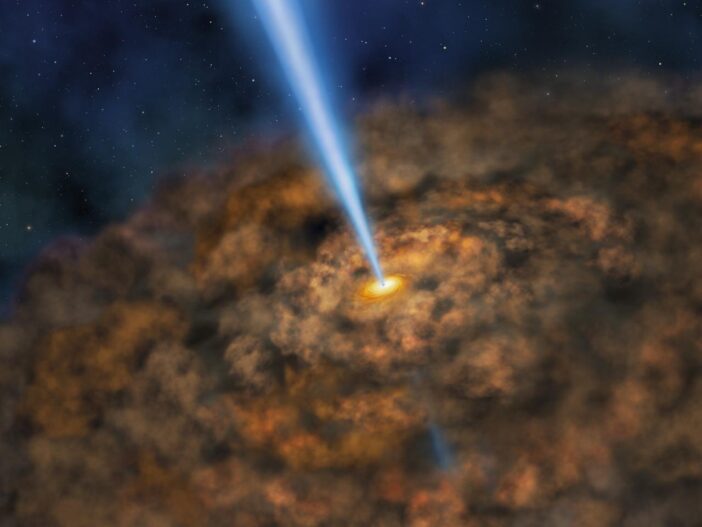
Early Supermassive Black Holes Aren’t All Monsters (opens the publisher’s site)
Researchers are investigating the presence and nature of supermassive black holes in the early universe to determine if they were all exceptionally large.
Science · Space.com · 18d ago
Were there 'lost cosmonauts' in the early Soviet space program? (opens the publisher’s site)
Cold War-era claims by amateur radio operators alleged they intercepted signals from Soviet cosmonauts who died on secret missions.
Science · NASA · 18d ago
NASA Scientists Show How Gravitational Waves Can Reveal New Worlds (opens the publisher’s site)
NASA studies show the LISA observatory under development could use gravitational wave detection to reveal new exoplanet populations across the galaxy.
Science · Space.com · 18d ago
Curiosity Mars rover sizes up new 'Nazca' dig site | Space photo of the day for Nov. 10, 2026 (opens the publisher’s site)
NASA's Curiosity rover is preparing to drill at a site called Nazca on Mars. The team will analyze the surface composition before beginning the drilling operation.
Science · Space.com · 18d ago
See the first images from the new ZWO Seestar S30 Plus — a smart telescope aimed at beginners (opens the publisher’s site)
ZWO released the Seestar S30 Plus smart telescope, designed for beginners to photograph galaxies and nebulae at an affordable price point.
Science · Space.com · 18d ago
Total solar eclipse 2027 vs 2028 — Which one should you choose, Egypt or Australia? (opens the publisher’s site)
Two total solar eclipses are scheduled for 2027 and 2028, visible from Egypt and Australia respectively, with different durations of totality.
Science · NASA · 19d ago
APOD: 2026 November 10 – Saturn Behind the Moon (opens the publisher’s site)
Saturn will pass behind the moon on November 10, 2026, creating an occultation event visible from certain locations.
Science · NASA · 19d ago
Autumn Mornings Bring Valley Fog (opens the publisher’s site)
Morning fog patterns over the Appalachian Plateau and Cumberland River valley demonstrate atmospheric phenomena that dissipate during the day.
Science · NASA · 19d ago
Curiosity Blog, Sols 5050-5055: It’s Nazca, Our 49th Drill Hole (opens the publisher’s site)
Curiosity completed its 49th drill hole at a location called Nazca to investigate disc-shaped rock inclusions that may be crystals.
Science · NASA · 19d ago
Rubies on Mars? (opens the publisher’s site)
NASA's Perseverance rover has detected unexpected mineral compositions in Martian rocks using its PIXL and SuperCam instruments.
Science · Space.com · 19d ago
Jupiter and Mars are set for a breathtaking close approach later this week: Here's how to see it (opens the publisher’s site)
Jupiter and Mars will make a close approach in the constellation Leo on November 15, visible to observers.
Science · Space.com · 19d ago
Are the James Webb Space Telescope's mysterious Little Red Dots actually tiny black holes left over from the Big Bang era? (opens the publisher’s site)
Research suggests JWST's Little Red Dots discoveries may contain primordial black holes formed during the Big Bang.
Science · NASA · 19d ago
NASA’s Chandra Finds Source of Star’s Mysterious Outbursts (opens the publisher’s site)
NASA's Chandra X-ray Observatory identified a hidden companion object triggering repeated outbursts from a massive star every 113 days.
other · AAS Nova · 19d ago
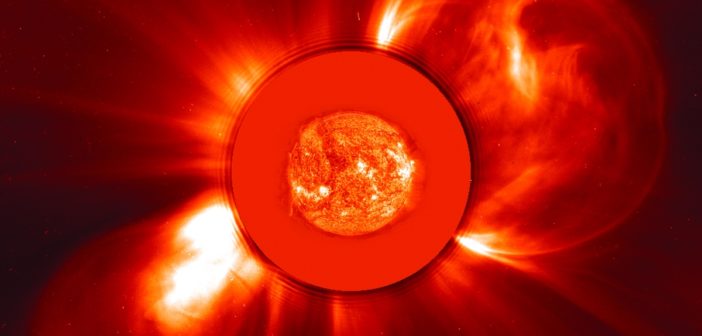
Exploring Coronal Mass Ejections with Synthetic Spacecraft (opens the publisher’s site)
New research demonstrates how the trajectory of a spacecraft through a coronal mass ejection affects the interpretation of the eruption's properties.
other · AAS Nova · 19d ago
The Low-α Splash Population in the Milky Way (opens the publisher’s site)
New research suggests that an early clumpy phase in the Milky Way's history was necessary to create 'Splash' stellar populations, which feature thick-disk chemistry on halo-like orbits.
other · The Planetary Society · 19d ago
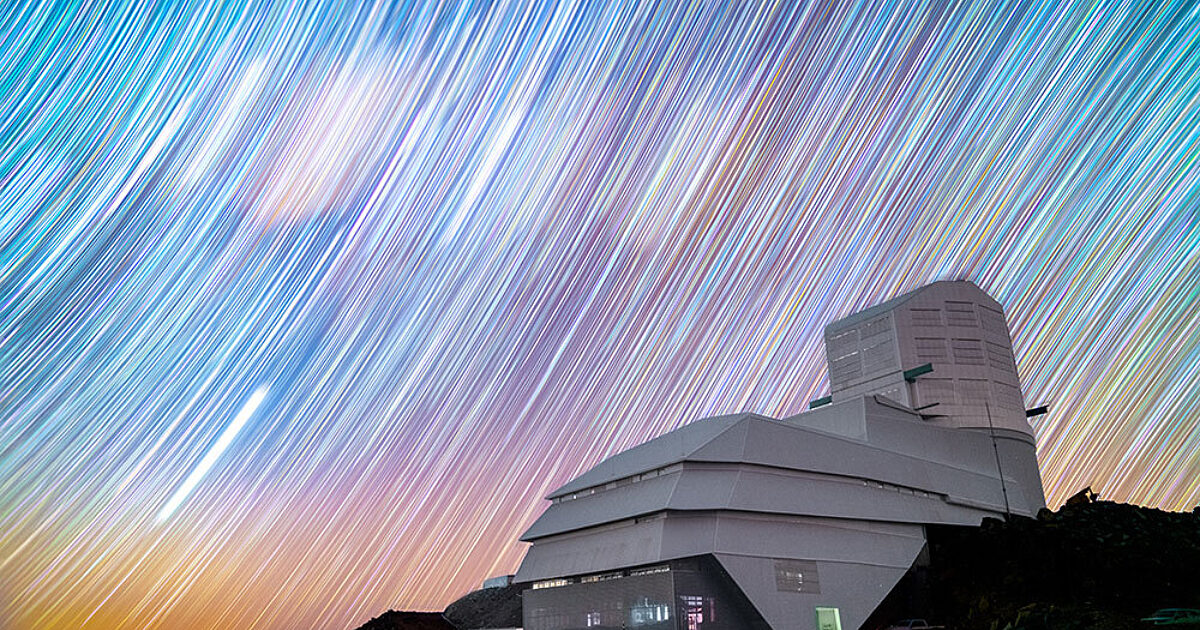
The Vera C. Rubin Observatory, making a 10-year time-lapse of the night sky (opens the publisher’s site)
The Vera C. Rubin Observatory will produce a decade-long time-lapse video of the sky to research dark matter, dark energy, and objects within the Solar System.
Science · Space.com · 19d ago
Meteorite that landed in Cape Cod was a 'lone wolf' from the outer solar system, scientists find (opens the publisher’s site)
Scientists determined a meteorite that fell in Cape Cod Bay originated from the asteroid belt between Mars and Jupiter.
other · SpaceWatch.Global · 19d ago
ESA’s Hera Captures First Close-Up Image of Didymos Binary Asteroid System (opens the publisher’s site)
The ESA's Hera spacecraft has taken its first close-up photo of the Didymos binary asteroid system, following up on NASA's planetary defense experiment.
Science · NASA · 20d ago
APOD: 2026 November 9 – Rigel and the Witch Head Nebula (opens the publisher’s site)
APOD features an image of Rigel and the Witch Head Nebula, showcasing a bright star and surrounding nebula structure.
Science · NASA · 20d ago
Ozone Hole Reaches Its 2026 Maximum (opens the publisher’s site)
The 2026 ozone hole reached its maximum extent as the seventh largest on record over 48 years, though less severe than some previous holes.
Science · Space.com · 20d ago
Legendary sci-fi magazine 'Starlog' returns as a yearly release, just in time for its 50th anniversary (opens the publisher’s site)
Science fiction magazine Starlog is returning as a yearly publication for its 50th anniversary.
Science · Space.com · 20d ago
Who is King Ghidorah? The cosmic connections of Godzilla Minus Zero's foe (opens the publisher’s site)
Article discusses fictional monster King Ghidorah from Godzilla film and its connection to a real cosmic structure.
Science · Space.com · 20d ago
Scientists simulate an Earth without life to help hunt for aliens and inhabited worlds (opens the publisher’s site)
Researchers model lifeless planetary atmospheres to improve methods for identifying inhabited worlds among rocky exoplanets.
Science · NASA · 21d ago
APOD: 2026 November 8 – Major Fireball Meteor (opens the publisher’s site)
APOD features an astronomy picture of the day showing a major fireball meteor, with explanation from a professional astronomer.
Science · Space.com · 21d ago
This Week In Space podcast: Episode 235 — Robots in Dark and Scary Places (opens the publisher’s site)
This Week In Space podcast episode 235 discusses the past, present, and future of planetary exploration with Dr. Jim Green.
Science · NASA · 22d ago
APOD: 2026 November 7 – De Gerlache-Kocher Massif (opens the publisher’s site)
Today's Astronomy Picture of the Day features the De Gerlache-Kocher Massif, with explanation from a professional astronomer.
Science · Space.com · 22d ago
On this day in space! Nov. 6, 1572: A German astronomer discovers the Tycho supernova with the naked eye, but everyone thought the cosmic explosion was a 'new star' (opens the publisher’s site)
In 1572, German astronomer Wolfgang Schulër observed a supernova with the naked eye, initially thought to be a new star.